



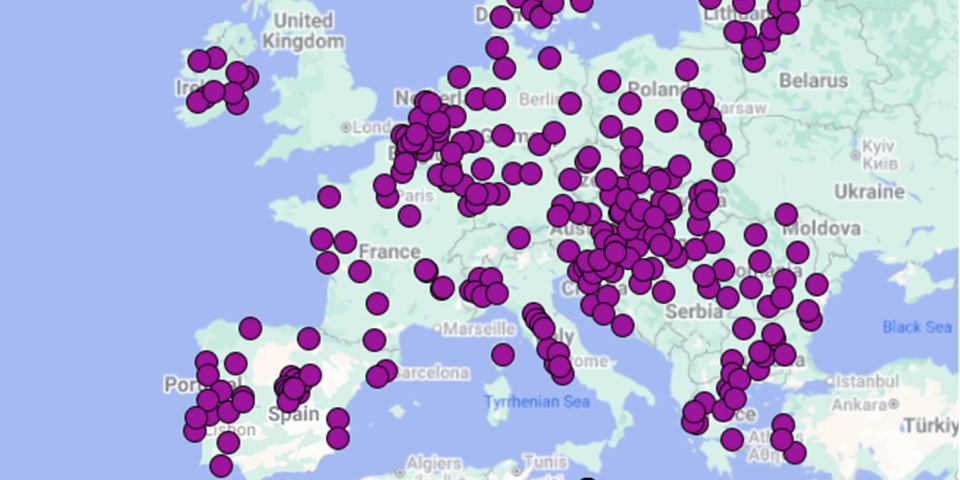
Managing Varroa destructor in honey bee colonies remains a constant challenge for beekeepers, requiring a balance between maintaining mite levels low whilst minimizing the negative impacts of miticide treatments on bee health. Synthetic varroacides such as coumaphos, tau-fluvalinate, and amitraz are widely used due to their convenience, but they can have negative impacts on the colony and persist in hive materials, with residues detectable long after application. To investigate the presence and dynamics of these synthetic varroacides, the INSIGNIA-EU initiative conducted a large-scale monitoring program, covering 312 bee hive sites across the European Union. The study employed the APIStrip—a novel, non-invasive passive sampler based on TENAX® sorbent—which, when placed inside the hive, passively adsorbs chemical residues from the internal hive environment. This approach has demonstrated its effectiveness eliminating the need to sample bees, wax, honey, or pollen, while still providing representative contamination data from a single, standardized analytical matrix. This study reports results from APIStrip.
Synthetic varroacides in honey bee colonies: A comprehensive monitoring program across the European Union