


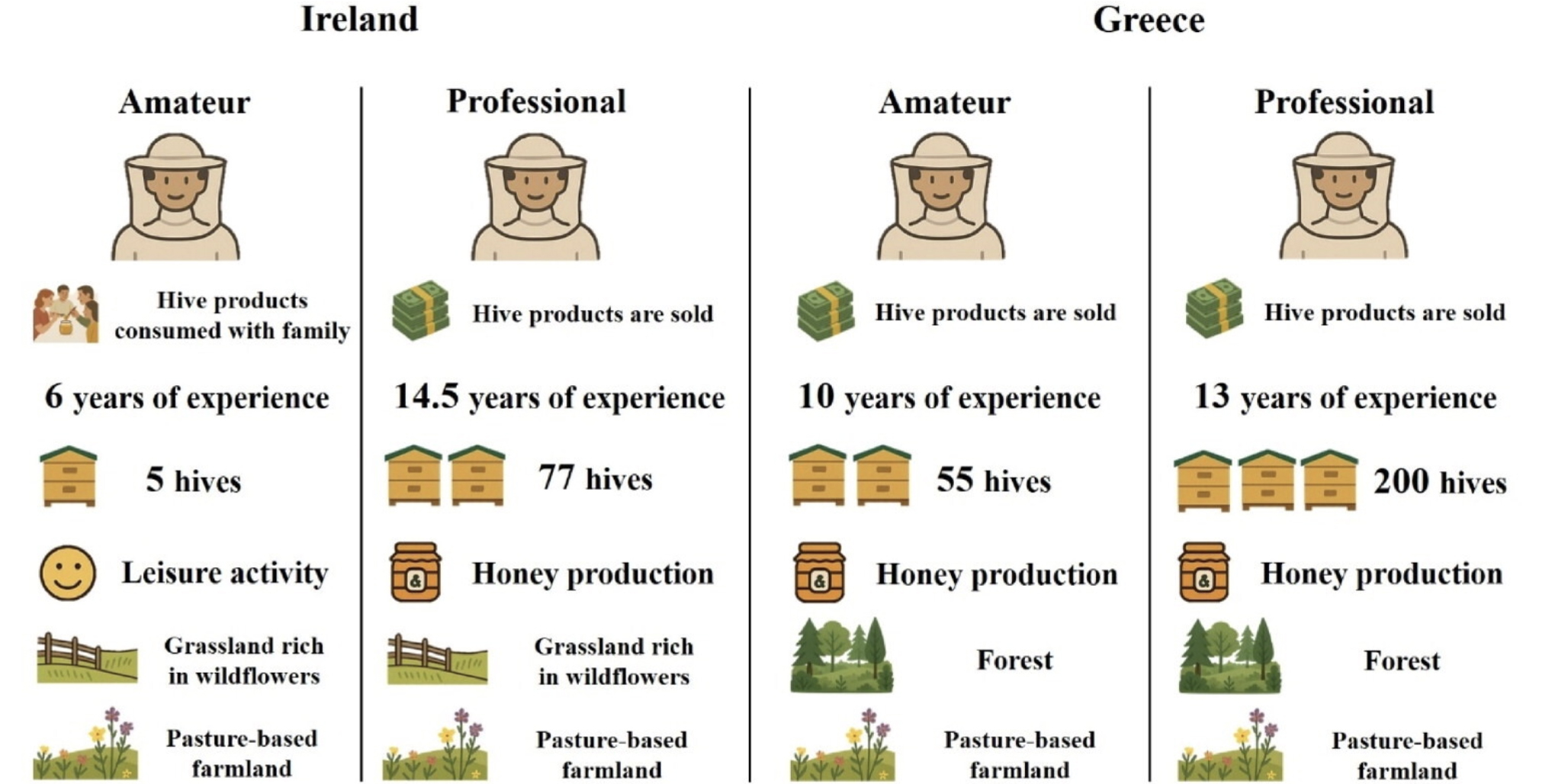
The use of plant protection products (PPPs) in farming systems poses a potential risk to honey bee health, yet beekeepers’ awareness and interactions with farmers remain understudied. This study compares the knowledge, perceptions, and PPP risk mitigation practices of amateur and professional beekeepers in Ireland and Greece, based on survey responses from 476 participants. Irish beekeepers were predominantly amateurs, while most Greek beekeepers were professionals. Irish amateurs reported significantly less experience in beekeeping and managed fewer hives compared to the other groups. Across both countries, insecticides were perceived as the most harmful PPPs to honey bees, with Greek beekeepers expressing greater concern than Irish counterparts. Greek beekeepers showed greater confidence in identifying PPP poisoning and were more likely to conduct PPP residue testing. Most beekeepers had limited interaction with farmers and were rarely notified before PPP application, often too late to take protective measures. Risk mitigation practices were minimal among Irish beekeepers, while Greek professionals more actively avoided agricultural areas. Beekeepers strongly agreed that farmers should be better informed on the risks of PPPs and expressed a desire for improved communication, preferably via mobile phone applications. Most respondents indicated interest in receiving further education, ideally through beekeeping associations. The findings highlight the need for targeted educational programs, structured beekeeper-farmer communication and collaboration, and accessible tools to mitigate PPP-related risks to honey bees. These insights can support the development of more effective pollinator protection and agro-ecological cooperation strategies.
Zioga, E., & Stout, J. C. (2026). Plant protection products and pollinators: a cross-country study on beekeeper awareness, risk perception, and interactions with farmers. Journal of Apicultural Research, 1–26.