


Honey bees are exposed to a wide range of environmental and ecological stressors that threaten individual health and colony sustainability. Growing evidence suggests that many of these stressors converge on a common target: the gut microbiome and its metabolic functions. The honey bee microbiome–metabolome axis represents a central regulatory system linking microbial symbionts with host nutrition, detoxification, immune competence, neural signaling, and social behavior. This review synthesizes current knowledge on how major stressors—including pesticides, antibiotics, pathogens, nutritional imbalance, thermal stress, habitat change, and environmental contaminants—reprogram honey bee chemistry by disrupting microbial community structure and, importantly, microbial and host metabolic pathways. We highlight recurring patterns consistent with functional dysbiosis, characterized by impaired energy metabolism, reduced production of shortchain fatty acids, altered amino acid and lipid metabolism, compromised antioxidant and detoxification capacity, and weakened immune regulation. However, much of the current evidence is correlative and derived from short-term or laboratory-focused studies; longitudinal and multi-site field validation of causal links remains limited. Importantly, emerging multi-omics studies suggest that profound metabolic disturbances can occur even when taxonomic changes in the microbiome are modest, emphasizing the need to move beyond descriptive community profiling toward functional and mechanistic assessments. We further discuss how stress-induced metabolic reprogramming at the individual level scales up to influence behavior, division of labor, and colony-level resilience.
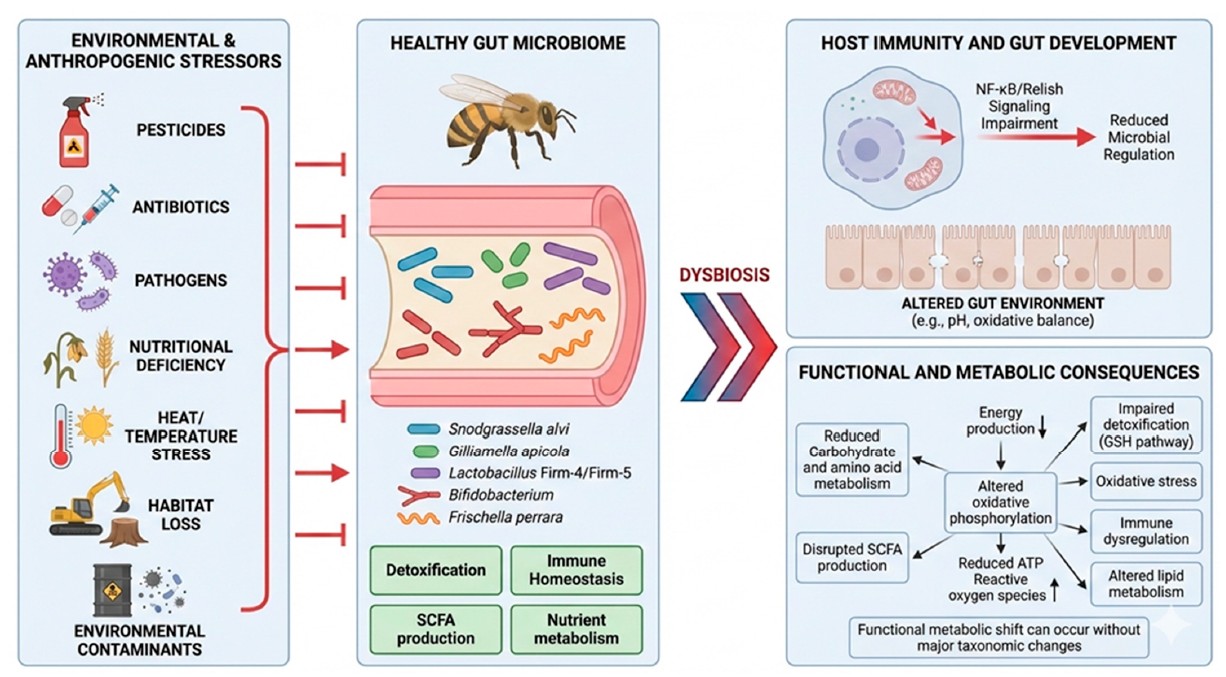
How Environmental and Ecological Stressors Reprogram Honey Bee Chemistry Through the Microbiome – Metabolome Axis